
Children do not need a miniature version of every adult task. Often they want a meaningful part in something already happening. A real napkin to place or a real book bag to check can be more engaging than a themed worksheet about responsibility.
These ideas are invitations to help, not age-based tests of competence. Adults stay responsible for safety, food preparation, private information and the final check on important tasks. Choose a moment with enough time to demonstrate patiently; a rushed departure is rarely the best teaching window.
Choose one part of the real job
For laundry, begin with washcloths or a few socks. For packing, give a short visible checklist and verify it together. For food, choose a safe task while adults handle knives, heat and dietary needs. A smaller job completed with understanding is more useful than assigning the entire process too soon.
Define what finished means before starting. “Put these three books on the low shelf” is clearer than “Tidy everything.” Let the child’s method differ when the result is safe and workable.
30 activities to choose from
Time and age labels are planning suggestions. Use the adaptations and provide the adult help your child needs.
1. Make a snack plan
What you need: Paper and two adult-approved snack choices. Cost: Use what you have.
Offer two snacks that suit your household’s dietary needs and let your child choose one. Draw what is needed, gather safe items and set a place to sit. An adult handles food preparation that involves knives, heat or choking risks. The child’s job is planning and helping, not producing a snack alone before they are ready.
Make it fit: Younger kids can choose and carry a napkin. Older kids can write a shopping reminder.
Adult help: Adult guides the real task.
2. Set one place at the table
What you need: A plate, napkin and appropriate utensils. Cost: Use what you have.
Show where one place setting belongs, then let your child arrange it. Use unbreakable items when useful and keep sharp utensils under adult control. Ask what someone would need to start eating comfortably. Resetting one place is enough practice; there is no need to make the child responsible for a perfect dinner table.
Make it fit: Younger kids can place a napkin. Older kids can set several places and check spacing.
Adult help: Adult guides the real task.
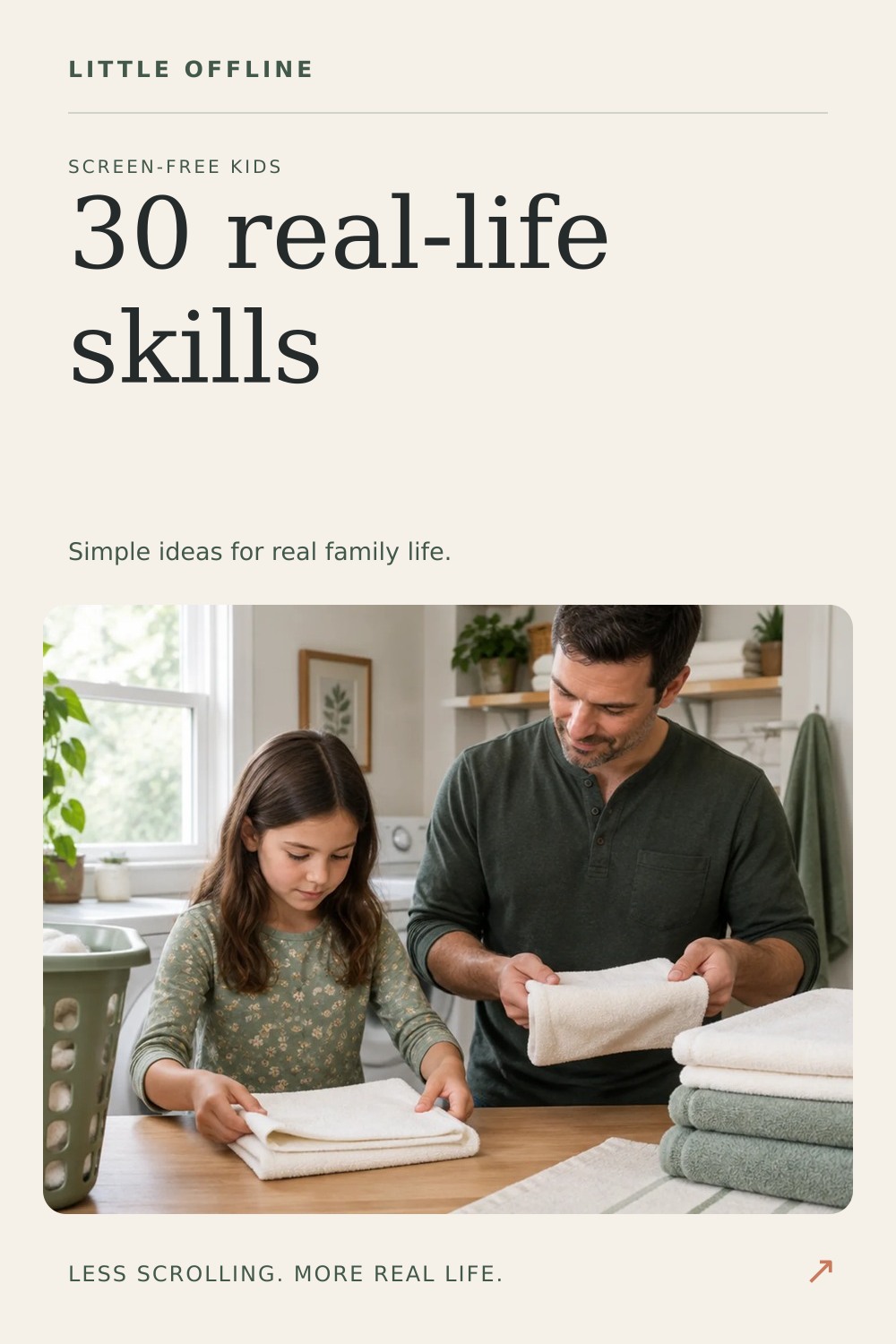
3. Fold the washcloths
What you need: Clean washcloths. Cost: Use what you have.
Spread one washcloth flat, fold it in half and place it in a small pile. Let your child choose a workable fold rather than insisting on the adult version. Work beside them for the first few pieces and stop before the task feels endless. Put the finished pile in an accessible storage spot together.
Make it fit: Younger kids can stack cloths. Older kids can fold towels and sort by room.
Adult help: Adult guides the real task.
4. Read a simple recipe together
What you need: A familiar recipe and pencil. Cost: Use what you have.
Look through a recipe before cooking and circle ingredients you already have. Identify which steps need adult handling, including heat, knives and appliances. Let your child explain the order in their own words. You can finish here without cooking; learning to inspect a plan is a complete small activity.
Make it fit: Nonreaders can identify pictured ingredients. Older kids can rewrite the steps as a checklist.
Adult help: Adult guides the real task.
5. Match containers with lids
What you need: Clean lightweight containers and large lids. Cost: Use what you have.
Place a few clean food-storage containers on a table and find matching lids. Test gently without forcing pieces. Avoid glass, sharp edges and small parts, and choose only containers that are clean and safe to handle. Nest the finished set together to make an immediate useful difference in a kitchen drawer.
Make it fit: Younger kids can match two obvious sizes. Older kids can plan a space-saving arrangement.
Adult help: Adult guides the real task.
6. Pack tomorrow’s bag
What you need: A bag and a short adult-approved checklist. Cost: Use what you have.
Lay out what tomorrow actually requires, such as a book, a water bottle and a spare layer. Let your child check off each item while packing, then an adult verifies essentials. Keep medication and other sensitive items under appropriate adult control. Unpack unnecessary toys together without turning the check into a surprise punishment.
Make it fit: Younger kids can choose one comfort item. Older kids can own a repeatable checklist.
Adult help: Adult guides the real task.
7. Practice a helpful phone script
What you need: Paper and a pretend phone made from a hand. Cost: Use what you have.
Act out asking a trusted adult for help: say your name, explain what happened and listen to the answer. Keep it a pretend call and do not dial real services for practice. Use calm everyday situations, such as asking to be picked up from an agreed location. Adults choose any personal information practiced privately.
Make it fit: Younger kids can learn a simple help phrase. Older kids can practice clarifying an instruction.
Adult help: Adult guides the real task.

8. Sort recycling with an adult
What you need: Clean dry packaging approved locally. Cost: Use what you have.
Choose three clean packages and check your local recycling guidance together. Let your child point to the right bin while an adult handles sharp edges or tricky packaging. Rules vary by location, so do not guess from a symbol alone. Rinse or clean only when appropriate and wash hands after sorting.
Make it fit: Younger kids can carry safe paper. Older kids can make a reminder based on local rules.
Adult help: Adult guides the real task.
9. Water one houseplant
What you need: A small cup and an adult-approved plant. Cost: Use what you have.
An adult checks whether the plant needs water and how much. Your child carries a small measured cup and pours slowly while you steady the pot if needed. Keep unknown or toxic plants out of reach and clean spills immediately. This is care for one plant, not a reason to water every pot daily.
Make it fit: Younger kids can help hold the cup. Older kids can keep a simple care note.
Adult help: Adult guides the real task.
10. Plan a library visit
What you need: Paper and library information checked by an adult. Cost: Use what you have.
Choose one subject or story type to look for and make a short wish list. Check which books need returning and place them by the door. An adult verifies opening hours and manages accounts. Keep the list flexible: finding a surprising book is a successful visit even if the original title is unavailable.
Make it fit: Younger kids can draw a desired topic. Older kids can note title, author and call number.
Adult help: Adult guides the real task.
11. Write a thank-you note
What you need: Paper and pencil. Cost: Use what you have.
Name one specific thing someone did and how it helped. Let your child write, dictate or draw the message in their own words. The note can be short and does not need a polished design. Deliver or mail it through an adult, keeping addresses and personal details private.
Make it fit: Younger kids can add a picture. Older kids can write and address a note with a final adult check.
Adult help: Adult guides the real task.
12. Practice opening a lunchbox
What you need: An empty lunchbox and safe containers. Cost: Use what you have.
Try the closures your child will actually use and notice which ones need help. Practice on a table where dropped items are easy to collect. Swap an awkward container for a simpler one if necessary; repeated frustration is useful feedback about the equipment. Clean and repack the empty set afterward.
Make it fit: Younger kids can try one latch. Older kids can arrange contents for easy access.
Adult help: Adult guides the real task.
13. Make a shoes-and-coat landing spot
What you need: A low hook or clear floor area. Cost: Use what you have.
Choose one practical place for outdoor items and decide what belongs there. Let your child draw a reminder if useful. Practice arriving home, putting things down and finding them again. Adults handle installing hooks or moving heavy furniture. A small clear area works better than an ambitious storage system nobody uses.
Make it fit: Younger kids can park shoes. Older kids can plan where wet items should dry.
Adult help: Adult guides the real task.
14. Wipe a small table patch
What you need: A damp cloth and plain water. Cost: Use what you have.
Choose a small clear section of table and demonstrate gentle wiping toward the center. Use plain water unless an adult handles an appropriate cleaner. Keep children away from cleaning chemicals and wash hands afterward. Dry the surface if it could become slippery or mark, then put the cloth where it belongs.
Make it fit: Younger kids can wipe beside you. Older kids can clear, wipe and reset a small surface.
Adult help: Adult guides the real task.
15. Make a pretend grocery budget
What you need: Paper and invented prices. Cost: Use what you have.
Draw three pretend groceries and assign simple whole-dollar prices. Decide what fits within an imaginary budget and what could wait. Keep the numbers clearly fictional rather than presenting them as current store prices. Let the child change the shopping goal to see how choices change; there is no need to discuss household financial stress.
Make it fit: Younger kids can choose two items. Older kids can compare totals and trade-offs.
Adult help: Adult guides the real task.

16. Measure a bookshelf space
What you need: A ruler or tape measure with adult help. Cost: Use what you have.
Choose a small accessible shelf and measure its usable width together. Compare it with the width of a book or storage box before deciding what fits. Adults manage retracting tape measures and any heavy objects. Keep measurements approximate if fine precision makes the activity frustrating.
Make it fit: Younger kids can compare long and short. Older kids can sketch a labeled plan.
Adult help: Adult guides the real task.
17. Learn a clothing fastener
What you need: A spare jacket or garment. Cost: Use what you have.
Practice one zipper, button or snap on clothing laid flat before trying it while wearing the garment. Demonstrate slowly and offer help without taking over every attempt. Choose a fastener suited to your child and stop if frustration rises. Being able to ask for help is also a useful outcome.
Make it fit: Younger kids can pull an already-started zipper. Older kids can practice a tricky familiar closure.
Adult help: Adult guides the real task.
18. Build a household repair list
What you need: Paper and pencil. Cost: Use what you have.
Walk through an adult-chosen room and notice ordinary things that need attention, such as a loose paper label or a missing storage basket. Write or draw the list without attempting electrical, structural or sharp-tool repairs. Adults decide what can be handled and when. Your child’s contribution is observation and clear communication.
Make it fit: Younger kids can name one issue. Older kids can group tasks by who can help.
Adult help: Adult guides the real task.
19. Plan a rainy-day outfit
What you need: Weather information checked by an adult and clothing options. Cost: Use what you have.
Talk through what today’s actual conditions require and choose a practical combination. Consider footwear and a layer that can be removed indoors. Keep extreme-weather decisions with adults. Let the child explain one choice rather than treating the activity as a test of independence.
Make it fit: Younger kids can select between two suitable options. Older kids can prepare a complete outfit.
Adult help: Adult guides the real task.
20. Sort the mail safely
What you need: Junk mail with private details removed. Cost: Use what you have.
An adult selects harmless envelopes and removes identifying or financial information. Sort them by size, type or whether they need recycling. Create a pretend inbox for papers that need attention. Do not give children access to real confidential documents simply to make the activity feel authentic.
Make it fit: Younger kids can sort by size. Older kids can create an action system for pretend mail.
Adult help: Adult guides the real task.
21. Make a shared task menu
What you need: Paper and pencil. Cost: Use what you have.
Write or draw a few small household jobs that are safe for your child: matching socks, choosing books or placing napkins. Let them choose one and agree what finished means. Keep the task manageable and help when needed. Choice is useful only when the options are genuinely acceptable to the adult.
Make it fit: Younger kids can select from two pictures. Older kids can suggest a task and estimate effort.
Adult help: Adult guides the real task.
22. Practice introducing yourself
What you need: A trusted family member. Cost: Use what you have.
Role-play a simple greeting for a familiar situation, such as meeting a librarian with an adult beside you. Say a name, ask a relevant question and listen. Do not require eye contact, touch or sharing private details. A wave, written note or other comfortable communication style can work.
Make it fit: Younger kids can practice a greeting. Older kids can introduce another family member.
Adult help: Adult guides the real task.

23. Make a lost-item plan
What you need: Paper and a familiar everyday object. Cost: Use what you have.
Choose something commonly misplaced, such as a library book. Decide the first three places to check and one person to ask. Practice with a pretend search rather than hiding an essential item when the family is rushing. End by choosing a reliable home for the object.
Make it fit: Younger kids can choose a storage spot. Older kids can create a short search checklist.
Adult help: Adult guides the real task.
24. Prepare a simple fruit plate together
What you need: Adult-approved fruit, water and a plate. Cost: Use what you have.
An adult selects and prepares fruit safely for the child’s age and needs. Your child can wash suitable fruit with help, arrange prepared pieces and carry an unbreakable plate. Adults handle knives, choking-risk preparation and food allergies. Sit down to eat rather than turning the plate into a moving game.
Make it fit: Younger kids can arrange prepared pieces. Older kids can plan portions with adult guidance.
Adult help: Adult guides the real task.
25. Make a calendar plan
What you need: A paper calendar and pencil. Cost: Use what you have.
Mark one upcoming family event and work backward to one small preparation task. Use a real date checked by an adult. Keep the focus on a manageable plan, such as returning a book before a visit, rather than filling every day. Let your child add a symbol they recognize.
Make it fit: Younger kids can mark today. Older kids can identify what needs doing the day before.
Adult help: Adult guides the real task.
26. Practice asking for a turn
What you need: A shared toy and a partner. Cost: Use what you have.
Act out asking for a turn, hearing that someone is still using an item and choosing what to do while waiting. Keep the example playful and short. Adults model clear words and respect a child’s answer. Do not stage a real conflict just to teach the script.
Make it fit: Younger kids can repeat a short phrase. Older kids can suggest a fair sharing plan.
Adult help: Adult guides the real task.
27. Create a simple packing zone
What you need: A clear table area and three needed items. Cost: Use what you have.
Divide a small space into ready, needs checking and leave at home. Sort the items for an actual outing while an adult verifies essentials. The categories make the process visible without buying organizers. Clear the zone after packing so the system does not become another permanent pile.
Make it fit: Younger kids can place ready items. Older kids can maintain a written checklist.
Adult help: Adult guides the real task.
28. Learn a gentle book repair
What you need: A damaged personal paper book and adult-approved repair tape. Cost: Use what you have.
Ask an adult whether the book is suitable for a simple repair; library books should be returned to staff for advice. Support a torn page and apply a small piece of appropriate tape with help. Avoid covering text unnecessarily. Discuss how to carry and store the book so the repaired page is protected.
Make it fit: Younger kids can hold a page flat. Older kids can help align the torn edges.
Adult help: Adult guides the real task.
29. Make a household how-to card
What you need: Paper and pencil. Cost: Use what you have.
Choose a routine your child knows, such as putting a game away. Draw three steps someone else could follow. Ask a family member to try the card and notice where the instructions are unclear. Revise the card instead of blaming the reader; the point is learning to communicate a process.
Make it fit: Younger kids can draw one step. Older kids can add a check at the end.
Adult help: Adult guides the real task.
30. Plan the cleanup before play
What you need: The supplies for any chosen activity. Cost: Use what you have.
Before starting, decide where the materials will go afterward and which parts need adult help. Put a small container nearby for scraps if needed. Keep the plan to one or two sentences, then begin the fun. Return to the same plan at the end instead of introducing a surprise standard for a spotless room.
Make it fit: Younger kids can put one item away. Older kids can lead a brief reset.
Adult help: Adult guides the real task.
Turn mistakes into information
A container that is too hard to open may need replacing. A forgotten item may mean the checklist needs a picture. A spill may show that the cup was too full. Correct the practical problem without turning the task into a character judgment.
Avoid rewards or praise that imply a child’s value depends on being useful. A simple description of the contribution is enough: “The napkins are ready, so we can sit down.” Stop or help when the task exceeds the child’s current capacity.
Keep the supplies simple
Use the materials listed with each activity first. If something is missing, our activity supply collection explains what different items are useful for and what to check before buying.
Questions parents ask
Which tasks can a preschooler try?
Small supported jobs such as placing a napkin, matching obvious sock pairs, stacking washcloths or choosing between two suitable outfits.
Should children cook independently?
That depends on the child, task and setting. These ideas keep adult responsibility for knives, heat, appliances, food safety and other hazards.
Save a little inspiration
Keep this idea for later.
Save the guide to your family activities board.
Save to Pinterest

